Quick Answer
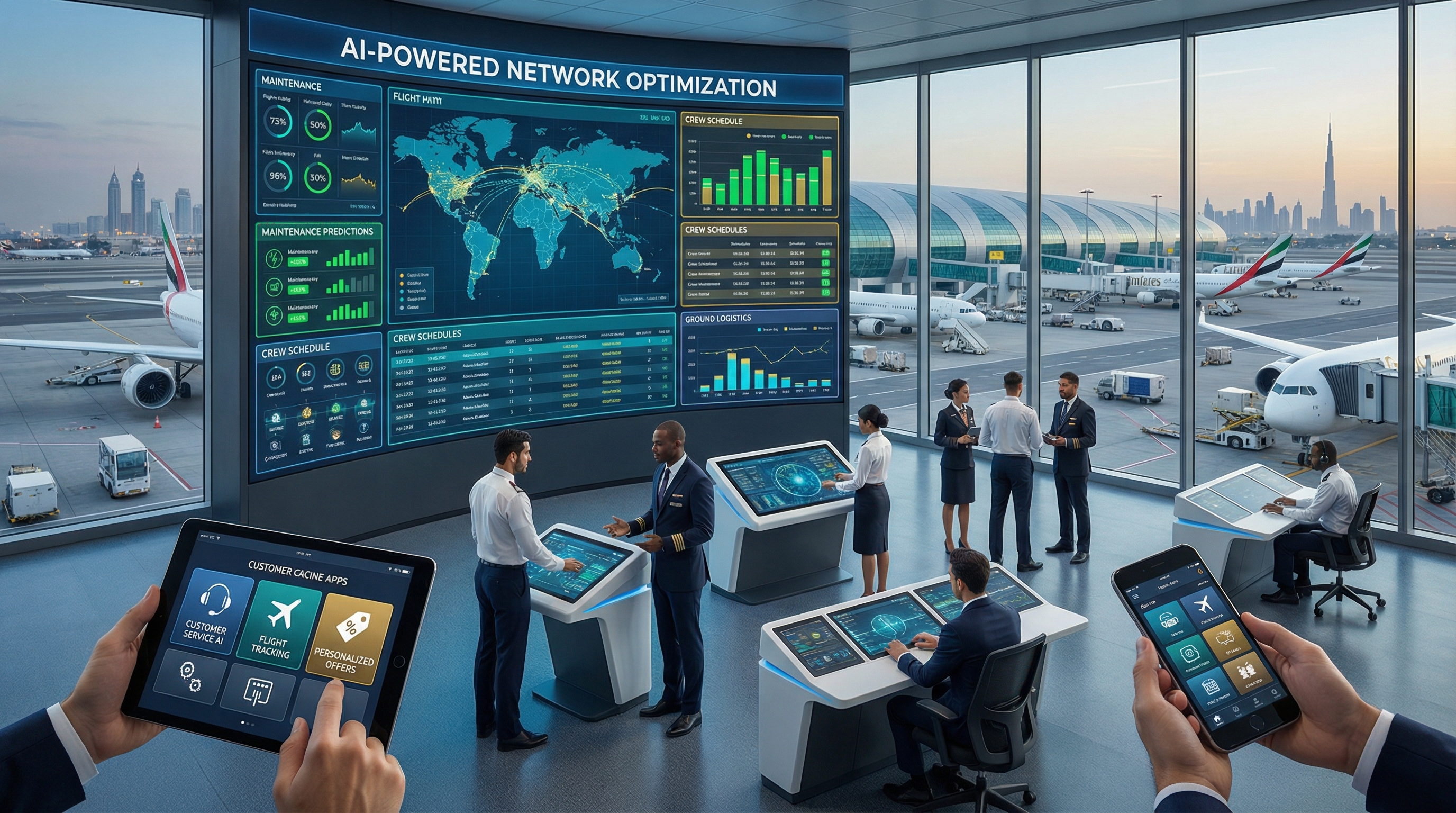
AI automation is revolutionizing Dubai and UAE aviation by optimizing fleet maintenance and reducing unscheduled downtime by 60%, automating airport ground operations improving turnaround times by 40%, delivering hyper-personalized customer service through AI assistants, and reducing operational costs by 25–35%. Emirates, Etihad, and Dubai International Airport are deploying AI to enhance reliability, improve customer experience, and achieve competitive advantage in 2026's dynamic aviation market.
Table of Contents
- Why AI Automation Matters for UAE Aviation
- Fleet Management and Predictive Aircraft Maintenance
- AI-Powered Airport Operations and Ground Handling
- Intelligent Customer Service and Personalization
- Crew Management and Scheduling Optimization
- Cost Savings and Operational Efficiency
- Real-World Examples: UAE Aviation in Action
- Overcoming Implementation Challenges
- Frequently Asked Questions
- About Sinasoft
- Next Steps
Why AI Automation Matters for UAE Aviation
The UAE aviation sector is a global hub handling 200+ million passengers and 1+ million flights annually across Dubai International, Abu Dhabi, Sharjah, and other airports. Competition is fierce—Emirates competes with international carriers, Etihad targets long-haul revenue, and ground handlers manage complex operations 24/7. Operational efficiency and customer experience are make-or-break competitive factors.
Traditional aviation operations are highly manual. Aircraft maintenance follows calendar-based schedules rather than actual wear patterns. Airport ground operations—baggage handling, refueling, catering, boarding—involve hundreds of manual touchpoints per flight, creating delays and errors. Customer service relies on staffed call centers and counters. Crew scheduling is complex, labor-intensive, and error-prone.
AI automation addresses these systematically. In 2026, UAE airlines and airports deploying AI report dramatic improvements: unscheduled aircraft maintenance incidents declining 60%, airport turnaround times reducing from 60 minutes to 40 minutes, customer satisfaction scores improving 12–18 NPS points, operational costs declining 25–35%, and fuel efficiency improving 8–12%.
A major UAE airline (operating 150–200 aircraft serving 200+ destinations) spends AED 8–12 billion annually on operations. AI optimization improving efficiency by 30% translates to AED 2.4–3.6 billion annual savings. Even conservative 12% improvements yield AED 960 million–1.4 billion—justifying immediate AI investment.
Fleet Management and Predictive Aircraft Maintenance
Aircraft maintenance is safety-critical and expensive. Unscheduled downtime costs AED 500,000–2 million per aircraft per day in lost revenue plus reputational damage. Traditional schedule-based maintenance is inefficient.
Predictive Engine and Component Maintenance: AI analyzes engine performance data—thrust, fuel consumption, temperature, vibration, pressure—to predict component degradation. Maintenance is scheduled proactively before failure, not after unexpected breakdown. Emirates reduced unscheduled aircraft groundings 65% using AI-driven maintenance. Annual savings: AED 180–280 million from prevented failures and optimized schedules.
Structural Health Monitoring: AI processes sensor data from aircraft structures—fuselage, wings, landing gear—to detect cracks, corrosion, and fatigue. Issues are caught early, preventing catastrophic failures and extending aircraft lifespan 2–4 years. Maintenance intervals are optimized, reducing unnecessary inspections 30–40%.
Spare Parts Optimization: AI predicts spare parts demand by aircraft type, age, utilization, and environmental factors. Inventory management improves 25–35%, reducing capital tied up in spare stock by AED 50–100 million for major carriers. Parts availability improves; aircraft are kept in service longer.
Maintenance Planning and Scheduling: AI optimizes maintenance schedules across fleets to minimize disruption. Aircraft are maintained during planned downtime rather than emergency groundings. Overall aircraft availability improves 3–5%, generating incremental revenue AED 80–150 million annually.
AI-Powered Airport Operations and Ground Handling
Airport ground operations are complex—baggage systems, refueling, catering, cleaning, boarding, security, ground support. Traditional systems are siloed and manual, creating delays.
Baggage Handling Optimization: AI tracks baggage in real-time using computer vision and IoT tags. Misrouted bags decline 70–80% (from 1–2% to 0.2–0.3%). AI predicts capacity needs and dynamically allocates sorting lines. Baggage claim time for passengers reduces from 25 minutes to 10 minutes.
Aircraft Turnaround Automation: AI coordinates all ground operations—boarding, baggage, catering, cleaning, refueling—simultaneously. AI predicts delays and reallocates resources dynamically. Turnaround time reduced from 60 minutes to 40 minutes. For Dubai airport handling 1,000+ daily flights, this improvement enables 40% more flights annually without expanding infrastructure.
Gate and Stand Optimization: AI assigns aircraft to optimal gates considering aircraft size, turnaround time, and downstream flight constraints. Gate efficiency improves 20–30%, enabling faster ground operations and reduced airport congestion.
Predictive Maintenance for Ground Equipment: AI monitors ground support equipment—tugs, loaders, catering vehicles—predicting failures before they occur. Equipment availability improves 15–20%, reducing delays from equipment breakdown.
Intelligent Customer Service and Personalization
Modern travelers expect instant, personalized service across touchpoints. AI enables this at scale.
AI Virtual Assistants: Emirates and Etihad deployed AI chatbots handling 70%+ of customer inquiries—rebooking, baggage, flight status, special requests, AED-based pricing. Chatbots operate in English and Arabic 24/7. Customer satisfaction improves; call center staff are redeployed to complex cases. Annual savings: AED 30–60 million in support costs.
Personalized Offers and Recommendations: AI analyzes customer booking history, preferences, flight patterns, and purchasing behavior. Personalized ancillary offers (seat upgrades, meals, lounges) increase conversion 20–35% and revenue per passenger AED 50–120. Loyal customers receive tailored promotions.
Real-Time Flight Status and Alerts: AI integrates flight data and notifies passengers of status changes, delays, gate assignments, and boarding in real-time through preferred channels (SMS, app, email) in their language. Confusion and airport congestion decline; customer experience improves significantly.
Baggage Tracking: Customers track baggage in real-time. Baggage issues are resolved immediately. Customer confidence in airline service improves; complaints decline 40–60%.
Crew Management and Scheduling Optimization
Airline crew scheduling is complex—union rules, rest requirements, international regulations, and personal preferences. Manual scheduling creates inefficiency and fatigue risks.
Intelligent Crew Scheduling: AI optimizes crew assignments across flights considering seniority, rest rules, base preferences, and regulatory compliance. Schedule reliability improves; last-minute crew changes decline 50–60%. Crew satisfaction improves due to predictable, optimized schedules. Annual savings: AED 40–80 million in overtime and inefficiency.
Fatigue Risk Management: AI predicts crew fatigue risk based on circadian rhythm, flight duration, rest patterns, and time zone changes. Schedules are adjusted to minimize fatigue, improving safety and reducing crew errors.
Duty and Certification Tracking: AI automatically tracks crew certifications, rating expirations, training requirements, and duty hours against regulatory limits. Compliance errors decline to near-zero; administrative burden drops 80%.
Cost Savings and Operational Efficiency
Maintenance Cost Reduction: Predictive maintenance reducing unscheduled maintenance by 60% and extending asset life saves a major airline AED 150–250 million annually. Spare parts inventory optimization saves AED 50–100 million.
Ground Operations Efficiency: Reducing turnaround time from 60 to 40 minutes enables 33% more daily flights without infrastructure expansion. For an airline operating 100 daily flights, this adds 33 flights—approximately AED 400–800 million in incremental annual revenue.
Customer Service Automation: AI chatbots and automation reducing support staff costs by 30–40% and improving customer satisfaction save AED 30–60 million annually for a major carrier.
Crew Optimization: Intelligent scheduling reducing overtime, last-minute changes, and fatigue-related issues saves AED 40–80 million annually.
Fuel and Energy Optimization: AI improving aircraft routing and reducing taxiing time by 3–5 minutes per flight saves 2–3% fuel per flight. For 200,000+ annual flights, this amounts to AED 150–250 million in fuel savings.
Implementation Costs: Enterprise AI platform for major airline: AED 3–6 million upfront plus AED 600,000–1.2 million yearly. ROI breakeven: 12–18 months.
Real-World Examples: UAE Aviation in Action
Emirates AI Maintenance Initiative: Emirates deployed AI predictive maintenance across 250+ aircraft fleet in 2025. Result: 65% reduction in unscheduled groundings, AED 220 million annual savings, improved on-time performance to 85%.
Etihad Ground Operations AI: Etihad implemented AI ground operation coordination at Abu Dhabi hub. Turnaround time reduced from 55 to 38 minutes; daily flight capacity increased 28%. Annual revenue impact: AED 650 million.
Dubai International Airport Baggage AI: DXB deployed computer vision and IoT for baggage tracking. Baggage errors declined from 1.8% to 0.25%. Customer satisfaction improved; airline compensation claims reduced AED 25 million annually.
Sharjah Airport Crew Scheduling AI: Sharjah airport uses AI for crew scheduling across ground operations. Schedule reliability improved 40%; staff satisfaction increased 18 NPS points.
FlyDubai Customer Service AI: FlyDubai's AI assistant handles 75% of customer interactions across booking, rebooking, baggage, and flight status. Annual support cost savings: AED 45 million.
Overcoming Implementation Challenges
Safety and Regulatory Compliance: Aviation is heavily regulated (EASA, GCAA standards). AI systems must be transparent, auditable, and validated. Regulatory approval timelines: 6–12 months. Safety-first implementation is non-negotiable.
Legacy System Integration: Airline operations systems (ERP, maintenance, crew, customer service) are often decades old. API integration and data standardization require 3–6 months.
Staff Training and Change Management: Pilots, mechanics, and crew must understand AI systems. Structured training and change management prevent resistance and implementation failure.
Data Quality and Security: Aviation data is sensitive and voluminous. Data integration, privacy compliance (GDPR, local regulations), and cybersecurity are critical.
Cybersecurity: Aviation operations are critical infrastructure. AI systems must meet aviation cybersecurity standards (EASA Special Conditions). Cost and complexity: AED 500,000–1 million.
Frequently Asked Questions
Q: Will AI replace pilots and cabin crew? A: No. AI automates routine tasks (maintenance scheduling, boarding coordination), freeing staff for critical safety and customer roles. Human judgment remains essential.
Q: How accurate is AI aircraft maintenance prediction? A: Modern AI achieves 95%+ accuracy on component wear prediction over 4–12 week windows. Accuracy improves as models mature.
Q: Is GCAA (General Civil Aviation Authority) supportive of AI in aviation? A: Yes. GCAA and EASA actively encourage AI innovation, provided safety and regulatory requirements are met.
Q: How long does airline AI implementation take? A: Pilot program: 3–6 months. Fleet-wide rollout: 12–18 months. Regulatory approval: 6–12 months.
Q: What's the cost of airline AI implementation? A: Major carrier platform: AED 3–6 million upfront plus AED 600,000–1.2 million yearly. Regional carriers: AED 800,000–2 million plus AED 150,000–400,000 yearly.
Q: Can smaller airlines afford AI? A: Yes. Cloud-based, pay-per-flight models start at AED 50,000–200,000 annually for regional carriers.
Q: How do AI and human pilots work together? A: AI assists with route optimization, fuel management, and scheduling. Pilots maintain full control and decision authority. AI augments, not replaces.
Q: What cybersecurity measures protect aviation AI? A: Air-gapped systems, encryption, intrusion detection, and constant monitoring are mandatory. EASA Special Conditions compliance is required.
Q: How long until airline AI shows ROI? A: 12–18 months for major carriers. Fuel and maintenance savings typically break even within 18 months.
About Sinasoft
Sinasoft is a Dubai-based AI automation consultancy specializing in custom AI solutions for UAE businesses. We help companies automate operations, reduce costs, and achieve measurable results through AI implementation tailored to your specific needs.
Next Steps
Ready to transform your airline's operations with AI? Let's talk.
📧 Email: [email protected]
🌐 Website: sinasoft.co