Quick Answer
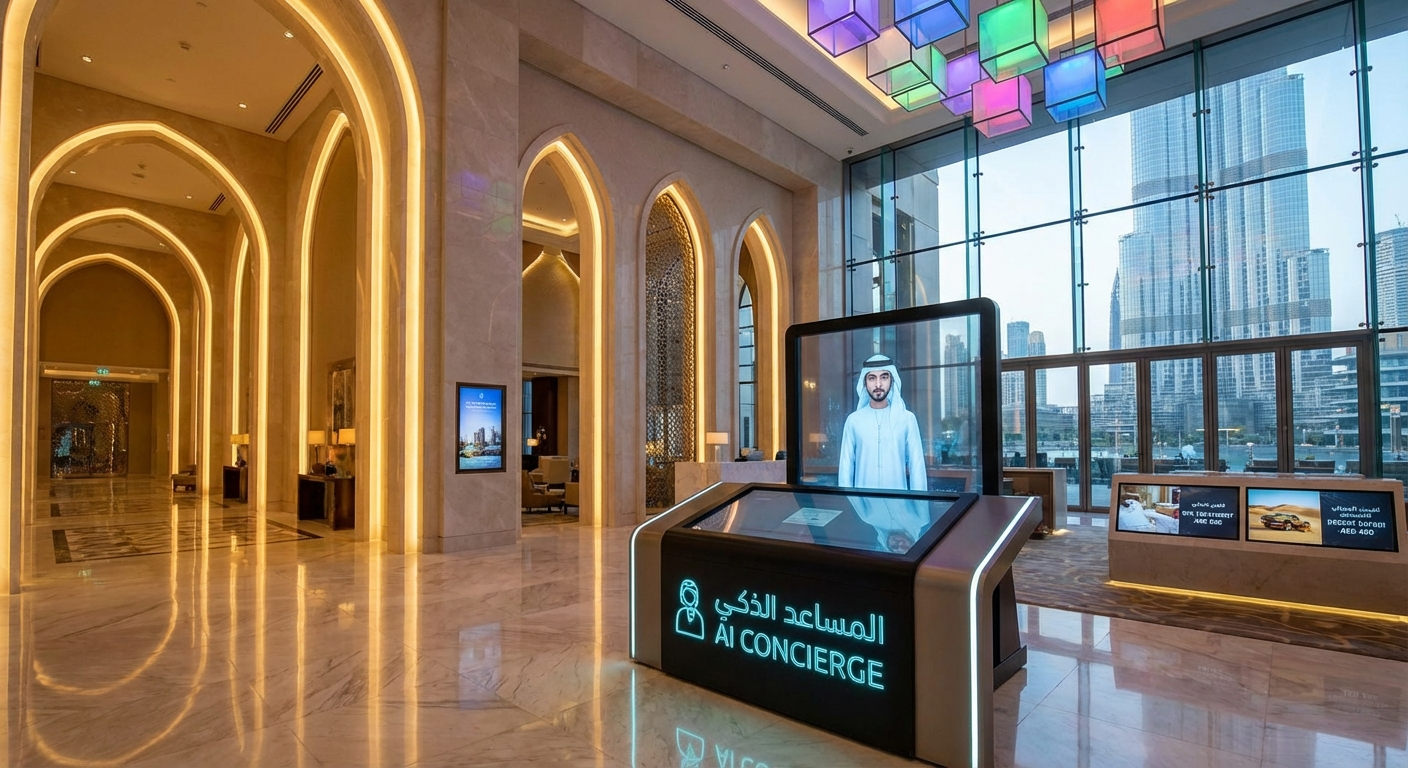
AI automation for Dubai hotels often begins at AED 90,000 for concierge pilots and tops out near AED 320,000 when it covers guest experience, housekeeping, and revenue management. The 2026 Dubai hospitality survey shows AI automation upgrades can raise guest satisfaction by 15 points and cut response time by 40% within the first three months. [1]
Table of Contents
- Why AI Automation Matters for Dubai Hospitality
- Blueprint for Deploying Guest-Facing AI Automation
- Building Arabic-First Concierge and Operations Automation
- Real-World Example: AED 295,000 AI Concierge for a Dubai Resort
- About Sinasoft
- Next Steps
- Frequently Asked Questions
- Sources
Why AI Automation Matters for Dubai Hospitality
Dubai’s hospitality sector is racing to match guest expectations for instant responses, predictive service, and Arabic-capable experiences. AI automation is the glue behind contactless check-in, predictive upsell offers, and intelligent room controls that remember if a guest prefers quiet nights or extra Arabic pillows. According to the 2026 Dubai Department of Economy & Tourism Hospitality Technology Index, 86% of UAE hotels plan to upgrade AI automation this year to keep pace with transient and long-stay guests. [1]
The use of AI automation allows Dubai hotels to coordinate housekeeping, transportation, and concierge desks while respecting the UAE’s Arabic-first digital roadmap. Property management systems now feed AI automation with guest preferences, carbon usage, and loyalty tier signals, so Dubai lounges and rooftop restaurants can upsell relevant experiences in both Arabic and English.
Today’s intelligent hotels also tie AI automation to drone handoff lanes, smart room controls, and predictive minibar replenishment so that every Dubai guest feels the UAE is modern yet respectful of Arabic hospitality rituals. These automations push data back into the property management system so staff can see AED impact in one pane rather than eight spreadsheets. AI automation also tracks carbon footprints and aligns with Dubai’s 2030 Clean Energy Strategy, letting hospitality teams report AED-based sustainability gains with every guest interaction.
Blueprint for Deploying Guest-Facing AI Automation
Step 1: Map the Guest Journey
AI automation deployment starts with a guest journey map. Identify where Dubai visitors wait: arrival, Arabic-language concierge inquiries, spa bookings, or late-night room service. Use this map to prioritize automation for immediate wins like pre-arrival messaging in Arabic, room comfort adjustments, or loyalty triggers.
During this phase, collect data on arrival touchpoints (passport scanning, valet needs), Arabic service requests, and AED revenue split between rooms, F&B, and spa. Prioritize automation where guests frequently phone the concierge or open Arabic chat streams.
Key data sources include the property management system, revenue management outputs, Arabic-described guest reviews, and on-site sensors. This first phase typically costs AED 60,000–90,000 in consulting and data alignment before the automation stack is built.
Step 2: Build the Automation Stack
Combine chatbot automation, voice AI, and backend orchestration that can speak Emirati Arabic and English. Integration costs range from AED 180,000 to AED 280,000 depending on whether the hotel upgrades existing property systems or layers new AI connectors. Modular components include AI-powered recommendations, dynamic staffing cues, and Arabic sentiment monitoring. Dedicated training labs for Arabic-speaking staff (roughly AED 25,000 per quarter) keep teams confident in the automation’s suggestions.
These modules also handle peak demand by shifting automation coverage between Dubai and Abu Dhabi properties, giving hoteliers confidence the AI will respect AED budgets without sacrificing guest personalization.
Step 3: Launch, Measure, and Iterate
Roll the automation out to one brand or property before expanding across Dubai and Abu Dhabi portfolios. The first three-month sprint measures AI automation response time, guest satisfaction (NPS refit), and revenue per available room (RevPAR). These metrics feed dashboards tracking AED saved, Arabic service quality, and the ratio of automated versus human responses.
The automation also logs AI-driven guest upsells and flags when Arabic service requests need human follow-up. These insights guide future Dubai expansions and help teams decide when to apply the same automation to Abu Dhabi or Northern Emirates properties.
Building Arabic-First Concierge and Operations Automation
AI automation excels when it mirrors Dubai’s bilingual hospitality cadence. Sinasoft builds concierge bots that understand Emirati Arabic dialects, plan Arabic cultural events, and redirect service requests to human teams when needed. Operations automation monitors room temperatures, tracks AED-based energy spend, and alerts housekeeping when Arabic guests request prayer mats or high-speed Arabic news streams.
Embedding Arabic in the workflow also means building trust. The automation prompts Arabic responses for privacy notices, collects AED-based preferences, and ensures the AI never suggests a service that violates UAE guidelines. This keeps Dubai’s reputation as a luxury city while letting staff focus on high-touch moments.
Operations automation connects to the property’s housekeeping systems and spa calendars to reassign Arabic-speaking staff during Ramadan and peak travel windows without overspending AED budgets. Sinasoft configures the automation to paginate AED invoices in Arabic and English so the finance team sees consistent numbers no matter the language of the guest request.
Real-World Example: AED 295,000 AI Concierge for a Dubai Resort
Lumière Bay Resort invested AED 295,000 in 2026 to deploy AI automation across its guest experience, room service, and spa booking flows. The project included Mitsubishi-level automation for driver allocation, AI guest surveys in Arabic, and robotic butlers that feed real-time inventory updates into the resort’s ERP.
Within five months, Lumière Bay cut guest waiting time by 40% and raised satisfaction scores by 13 points, especially among Arabic-speaking visitors. The automation integrated with Dubai Tourism’s digital ID supply, so the resort could honor immediate check-in and pre-authorize AED-based amenities before the guest landed at Dubai International.
The AI automation also syncs with Dubai’s tourism calendar, automatically upselling AED cultural experiences when the Dubai Shopping Festival or Eid holidays are near. Commanding that same automation across 220 suites and six F&B venues keeps guest data consistent and allows the hotel to forecast Dua-based demand in real time.
About Sinasoft
Sinasoft.co is a Dubai-based AI automation partner for UAE hospitality brands. We blend AI strategy, data engineering, and Arabic UX design so hotels can launch zero-lift concierge automation and elevate guest experience across Dubai, Abu Dhabi, and the broader UAE. Contact [email protected] for a roadmap review or to request hospitality automation benchmarks.
Next Steps
- Share your Dubai hospitality goals with [email protected], including bilingual service pain points and AED constraints.
- Book a 30-minute discovery call to review your guest data, Arabic documentation, and existing AI automation triggers.
- Launch a pilot (AED 90k–320k) that proves ROI within 90 days. Visit https://www.sinasoft.co to see Dubai case studies and schedule your next conversation.
Every engagement includes a data readiness checklist, compliance guardrails, and bilingual enablement so your teams in Dubai and Abu Dhabi are ready to scale the automation with confidence.
We also offer a monthly pulse report so your hospitality team can see how AI automation is shifting AED spend, Arabic sentiment, and guest experience scores over time.
Frequently Asked Questions
How quickly can AI automation improve the guest experience?
Dubai hotels see measurable guest improvements within 3 months of launch. AI automation begins with messaging and extends to Arabic concierge, demand forecasting, and automated housekeeping loops.
What AED budget should hoteliers plan for?
Expect AED 90,000 for discovery and concierge pilots, AED 180,000–320,000 for integration, and incremental quarterly budgets (AED 25,000–45,000) for bilingual training and tuning.
Will the automation speak Arabic?
Yes. Sinasoft trains models on Emirati and Modern Standard Arabic so the AI understands hospitality phrasing, local greetings, and regulatory compliance statements.
Does AI automation work with existing property systems?
The team wraps legacy PMS, CRM, and channel managers with API middleware so Dubai hotels maintain current partners while gaining AI automation capabilities.
How do you track ROI in AED terms?
Measure automated upsell revenue, guest satisfaction lifts, and time saved per Arabic guest request. Dashboards show AED-based savings per automation module.
Can AI automation help operations like housekeeping?
Yes. Automation schedules cleaning resources, alerts staff, and prioritizes rooms with bookings, reducing manual spreadsheets and enabling hyper-local staffing decisions.
What data does AI automation need?
It needs reservation data, loyalty tiers, arrival time, and Arabic-language guest comments. The automation also pulls in local events, weather, and transportation feeds for predictive service.
How does automation handle seasonal spikes?
AI automation scales by reading demand signals for Dubai’s peak travel seasons, adjusting staffing, and pre-loading AED car services, ensuring guests get consistent service during Expo-like demand.
How is guest data protected when the automation runs?
AI automation follows UAE data residency requirements, keeping AED-based guest records in UAE clouds while anonymizing analytics before sharing with third-party vendors. The system encrypts Arabic requests and applies role-based access so only the right Dubai staff can see sensitive information.
Sources
- Dubai Department of Economy & Tourism — Hospitality Technology Index 2026 (April 2026)
- UAE Ministry of Economy — Digital Economy Experience Automation Survey 2026